Navigating Health Challenges: A Journey with the Passenger Prince

The Passenger Prince and the Scissors

My Passenger Prince woke up this morning with a spring in his step and went straight for the scissors — gladly, and with purpose. Such great enthusiasm for scissors hasn’t been seen in our family since he cut the umbilical cord for each of our kids.

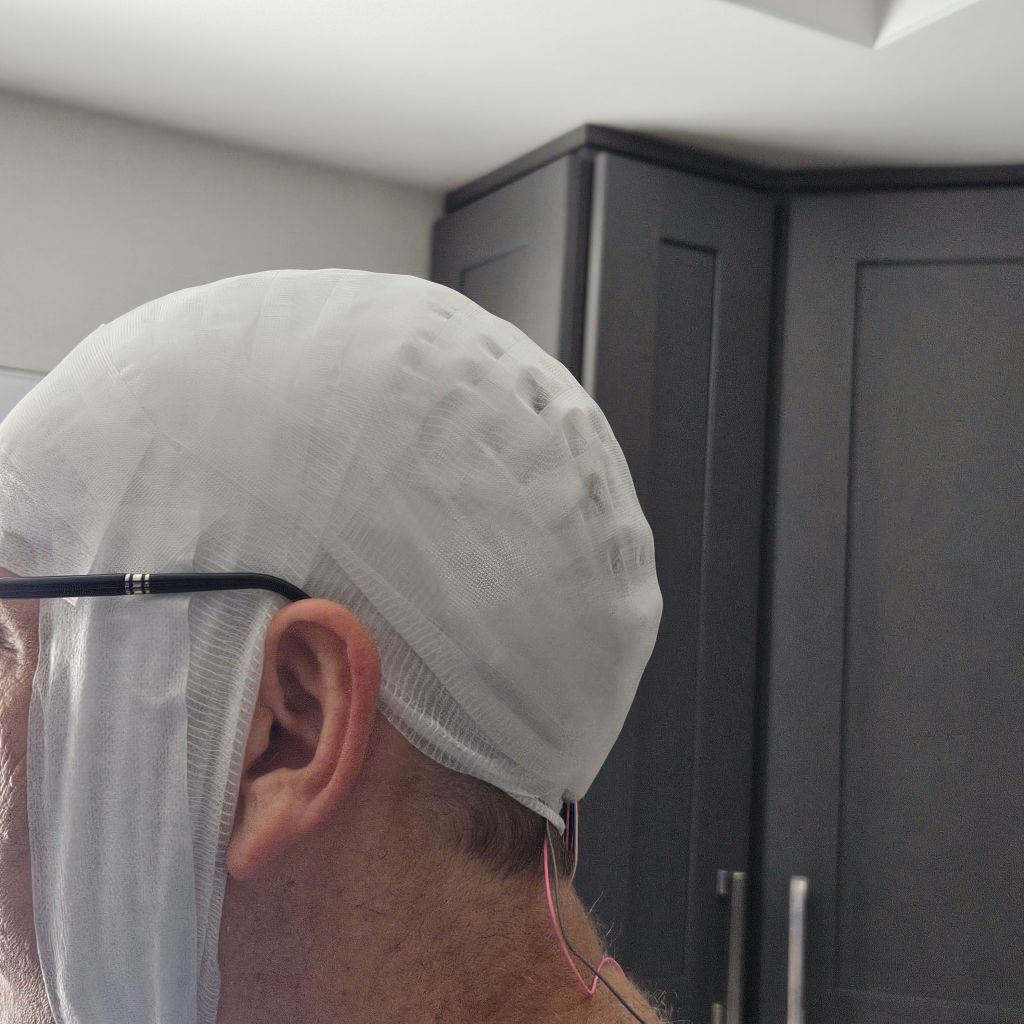
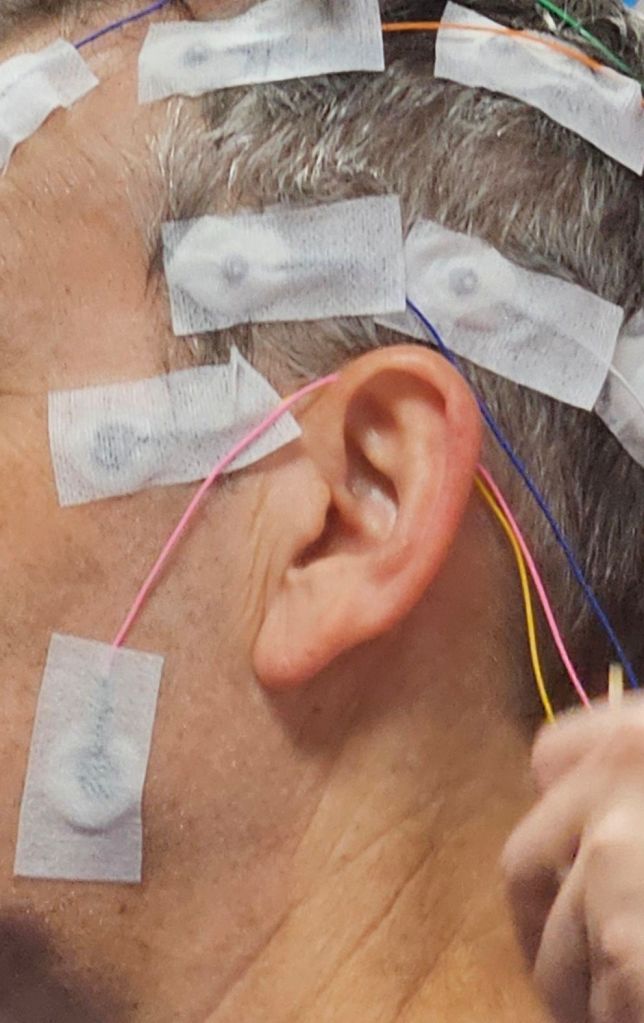
The Prince had been tethered to an EEG machine for the last three days on our never-ending quest to figure out what happened to his brain — and why he had a seizure at fifty-nine.

On Friday, we went to get the EEG machine. The technician placed the electrodes all over his head and wrapped it like a mummy. Luckily, it was Halloween, so at least for a day his appearance didn’t draw any strange looks.

The Prince was confined to the house under strict instructions: no showers, no sweating. One day was meant to be an easy “just-watch-TV” kind of day; the next was supposed to “engage his brain.” So, I found some math quizzes online and left them for him. He also started a puzzle that will never be completed and tackled a few brain teasers to keep those neurons firing.

My Passenger Prince is usually on the move, so keeping him confined was no small feat.

Three nights of a camera observing him sleep added to the “fun” — for both of us. He had a hard time sleeping with all the cables, and I had a hard time sleeping with the camera’s night-light mode glowing in the room. I like to sleep in complete darkness.

We are both tired — him from the uncomfortable sleep, and me from the lack of it. We do have a guest room with a perfectly good bed, but it’s not our comfy bed, and so we endured.

And now, we wait again. Ten days until we get the results, and then another neurology appointment to see what’s next. Maybe this time, we’ll get some answers.

Until then, we’ll keep going — and “enjoy” our daily drives, grateful for small comforts and hopeful for clarity ahead.
Conversations from the Driver’s Seat

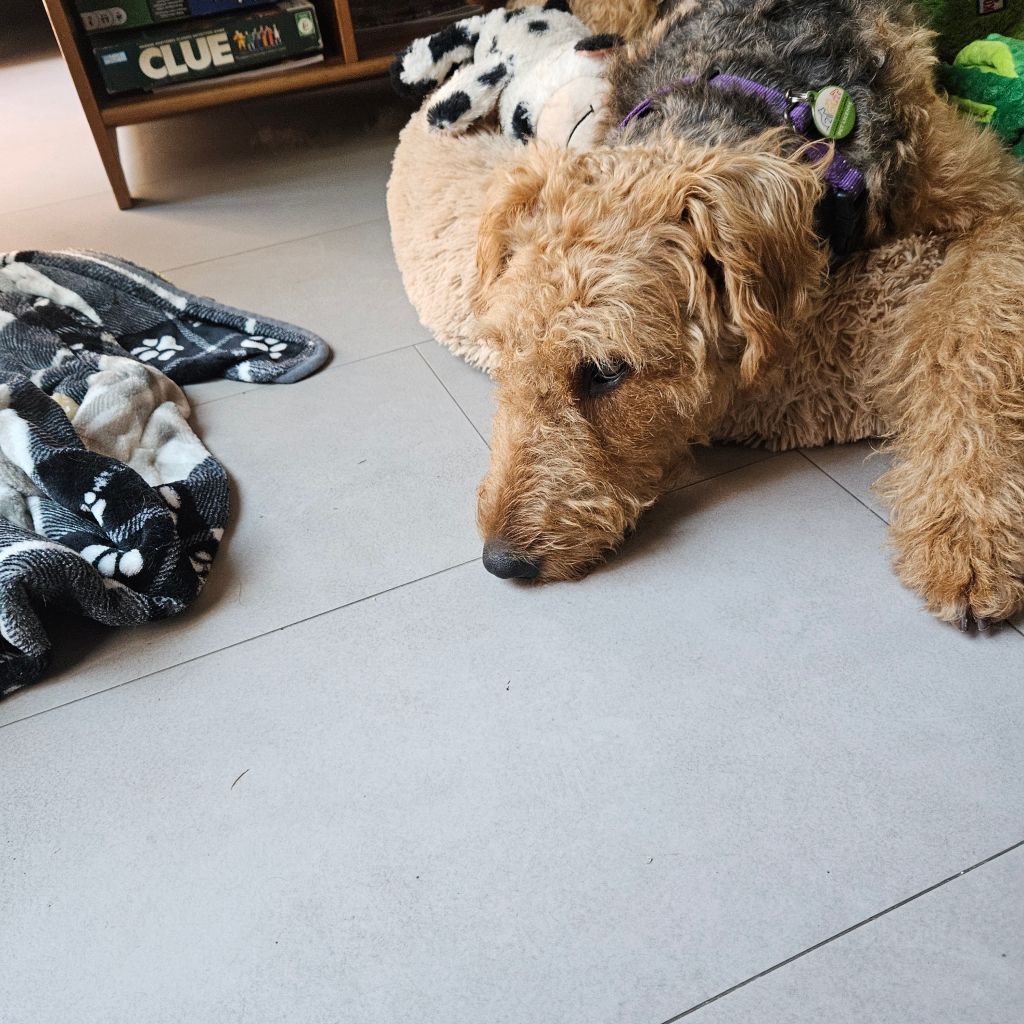
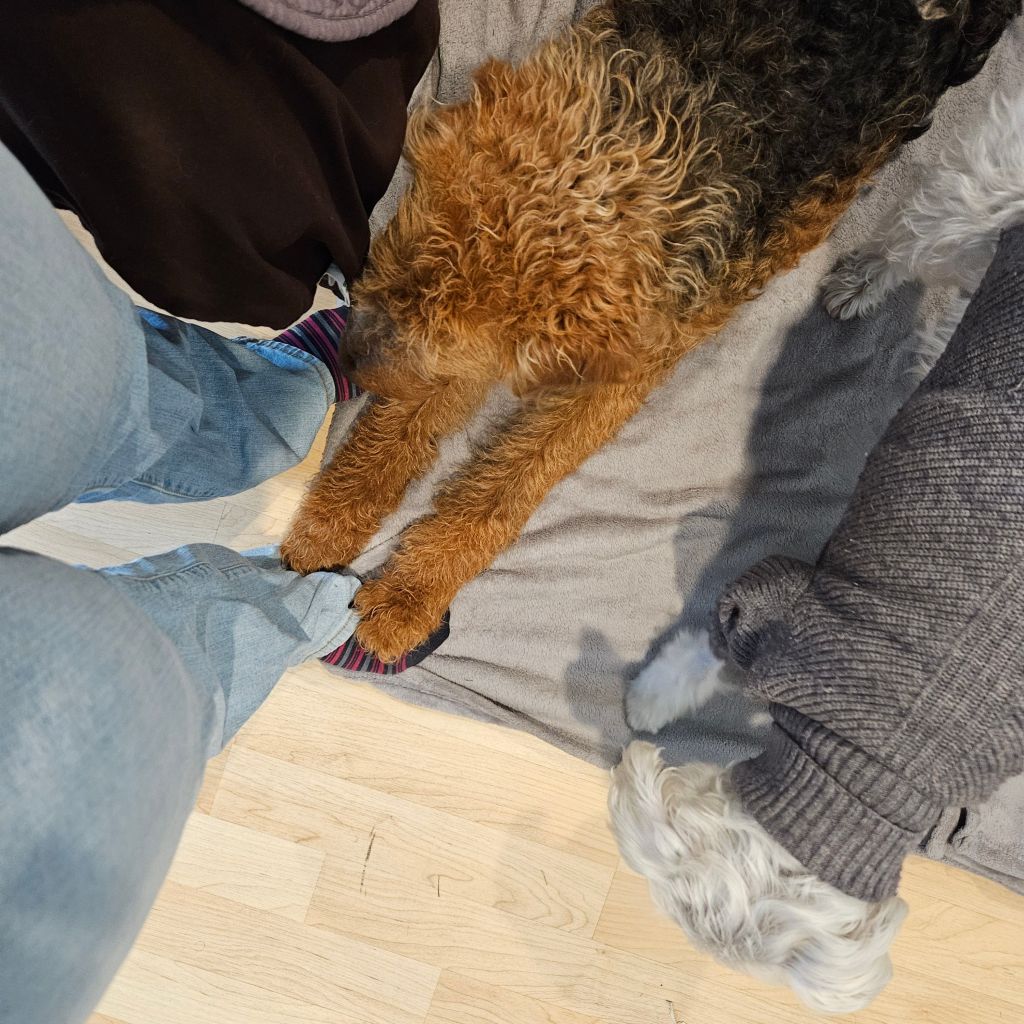
My life as a driver continues—although I got a break yesterday, as my husband had a friend take him to work. That gave me the rare opportunity to sleep in. Well, to “sleep in” until 7:20 a.m., when Shuki, the family dog, decided I’d slept enough.

I needed a driving break—not because driving itself was the problem, but because someone at work decided to stick an early meeting on my calendar. A meeting I couldn’t take from the car because, of course, they needed to see my face.

Not all meetings are productive. This one definitely wasn’t. Not due to lack of preparation or context, but because of the participants.

When we’re faced with change—professional or personal—we’re not always open to it. There’s fear involved: fear of leaving our comfort zones and confronting challenges that force us to adapt. I couldn’t quite understand the strong reaction in that meeting. I saw the big picture. I had already been part of the transition being discussed. So I was surprised by the resistance.

Back in the driver’s seat today, I shared all of this with my husband. He offered a perspective I hadn’t considered: that people often resist change not because they don’t understand it, but because they’re afraid—afraid of having to learn new things, of stepping into unfamiliar roles, of failing.

Driving still isn’t something I enjoy. I much prefer my “passenger princess” role. We’re still waiting on his medical test results, which is why I’ve taken on this new morning routine. But these forced drives have brought one unexpected benefit: the chance to talk. With our opposing work schedules, we rarely get that during the week.

I still get annoyed when he tells me how to drive. But I do appreciate these small, quiet moments we share together.

Who Saved Who? My Journey with Shuki and the Power of Patience

Patience is not a strong virtue of mine. In fact, I’m pretty sure I don’t possess such a trait. I’m one of those people who need things done yesterday, even if the idea just crossed my mind three seconds ago.

We adopted a rescue dog several weeks ago, and we have no knowledge of her age or past, other than the fact that she was malnourished, neglected, and abused. With rescue dogs, there’s the 3-3-3 rule: you need a lot of patience. The first three days, the dog decompresses from the transition. The next three weeks, the dog settles into its new routine. And around three months, the adopted dog truly settles in and understands they are safe. Of course, every dog takes their own time and behaves a little differently. But the key to a successful adoption is providing a safe environment, training, and—most importantly—patience.

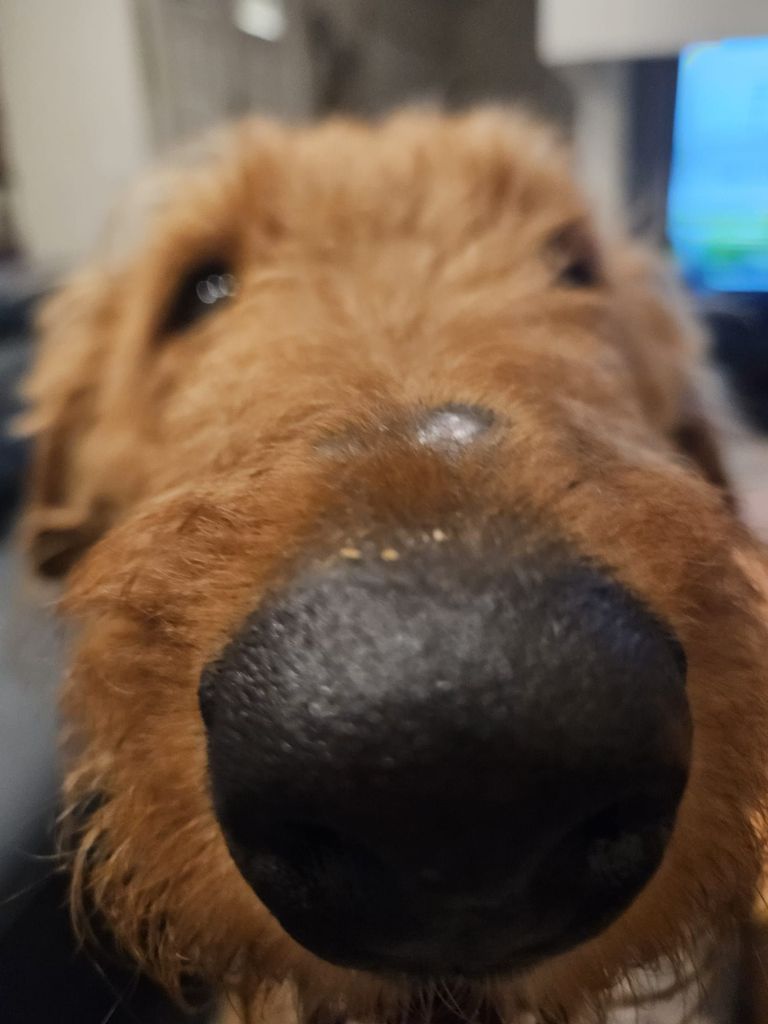
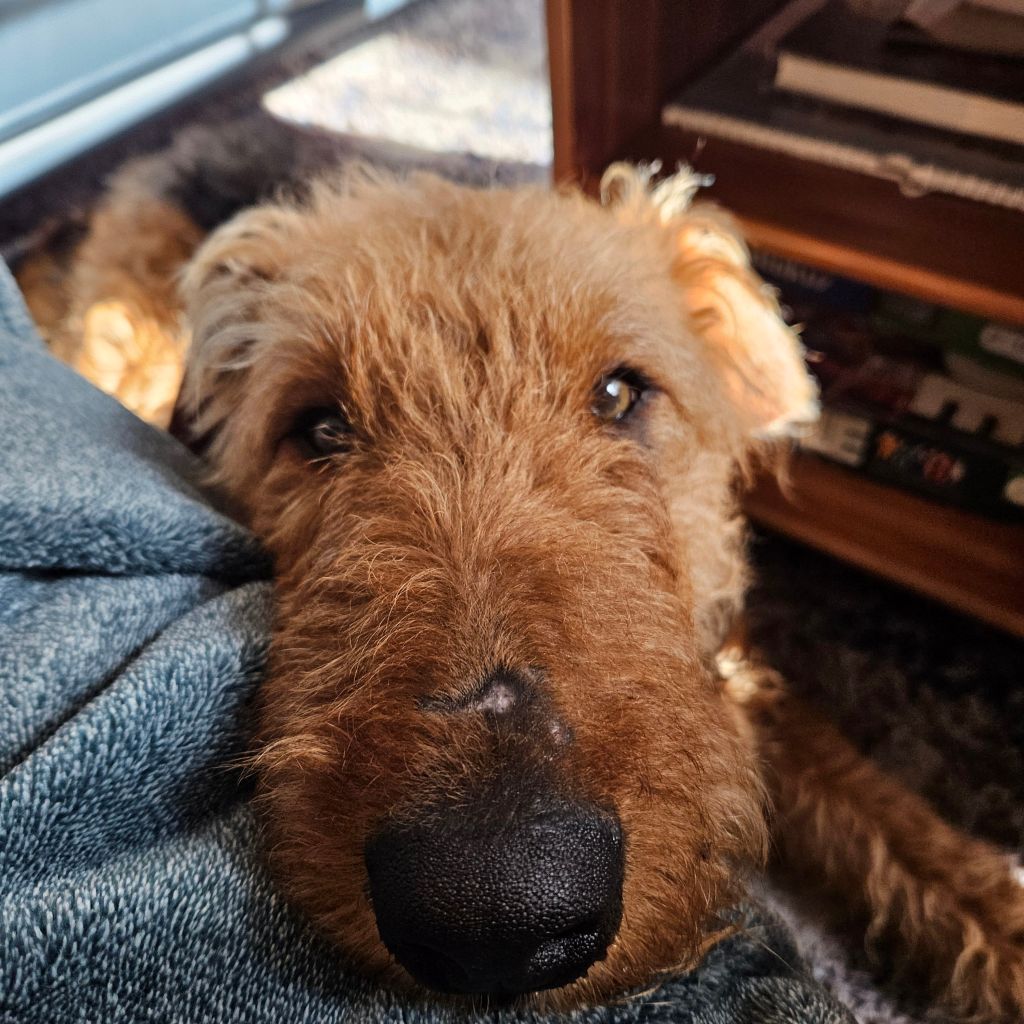
Patience. Again, not one of my strong suits, but in this case, a necessity. Shuki, the Airedale, has been with us for almost six weeks now. It took time for her to realize that I am safe and won’t harm her. In the beginning, she was afraid of even my smallest movements. She ate her food like a vacuum at light speed. She learned her name, responds to it, and is getting better and stronger every day.

Some days feel like the movie 50 First Dates—every morning, it’s like we’re starting the bonding process from scratch, even though she’s been with us for weeks. Unfortunately, like the movie, I can’t ask her to relive the past through a highlight reel of her last six weeks.

And once again, patience is needed. You often see bumper stickers with the saying “Who saved who?” I’m learning that this is true. Shuki is learning to trust, and in return, she’s teaching me the invaluable lesson of patience—something I never thought I’d master at my age. For that, I am grateful.

I Do Not Hear, and He Does Not Listen

A deeply personal essay about sudden hearing loss, marriage, and the invisible gap between sound and understanding.

I like to say that my left ear is for decorative purposes only. It holds my glasses and I can put beautiful jewelry in it — beyond that, nothing more. I simply have no other use for it.

Five and a half years ago, I lost my hearing overnight. I went to bed with severe ringing and woke up to silence.

I saw doctors. I had a brain MRI. They found nothing wrong with my brain — contrary to what my husband thinks. I got the typical solution when no clear diagnosis appears: a virus.

I love the virus diagnosis. It encompasses everything and yet explains absolutely nothing.

My left ear has five percent hearing, which in reality amounts to nothing. Hence, decorative purposes only.

My right ear is slightly better — but only slightly. I wear hearing aids. Good, expensive ones. And yet my hearing will never be the same.

I love it when people say, “But you wear hearing aids — can’t you hear normally?”

No. I can’t.

Hearing aids are not glasses. They do not fix the problem 100%. If anything, they sometimes create more noise.

The world is a very loud place. Very loud.

My brain does not always tolerate the constant sound. In loud places, it takes enormous effort to figure out where sounds are coming from and what people are saying. Sometimes I just want to go home, take out the aids, swallow two painkillers, and sit in silence with the migraine that follows.

Those around us who have not experienced this often don’t understand — even the ones who walked through the hearing loss journey with us.

My husband and I were planning dinner with friends. He suggested a restaurant.

“Yes, it’s nice,” I said. “But I can’t hear anything in there.”

“It’s great,” he replied. “I don’t think it’s loud.”

He is lucky I did not hit him.

I looked at him and asked, “Did you not hear what I just said? I am, after all, the deaf one.”

He repeated himself.

“Yes,” I said. “It’s not loud for you.”

For me, the acoustics are terrible. There’s loud music, dozens of conversations, clattering plates — and I hear everything and nothing all at once. I just sit there, feeling like a decoration. Me and my ear.

I explained myself again. I’m not sure he fully understood. But we’re going somewhere else — somewhere that won’t leave me with a migraine and screaming tinnitus.

It’s funny how I do not hear, and he does not listen.

Maybe funny. Maybe a little sad.

Fear, Manta Rays, and a Bathing Suit

A journey from fear to fun in a one-piece

Like many women my age—and honestly, women in general—I have a fear of a particular article of clothing in my closet: the bathing suit.

Last month I went on vacation to the Caribbean. A vacation that involved pools, snorkeling, diving with manta rays, and—unfortunately—a bathing suit.

I do own one or two, though I can’t remember when I bought them. Sometime before COVID, which means it’s safe to assume six or seven years ago. I even have access to a heated pool in my neighborhood and one at the gym, but I haven’t used either since my kids reached double digits.

I usually tell people I don’t swim because I don’t want to ruin my hair color. And while that’s a valid excuse, it’s not the whole truth—I could always wear a swim cap. The real reason is simple: I don’t like being in a bathing suit.

We were taught, sadly, that only skinny women—or perfectly toned women—should wear bathing suits in public. I’m five-foot-nothing, curvy, in my late fifties, and I’ve had three kids.

Confidence in my body has never been my strong suit (pun intended). But as I get closer to sixty, something has shifted. I’ve reached the point where I truly don’t care about the “silly” things anymore—how I look or what other people think.

So I went snorkeling. I swam with manta rays. I wore the bathing suit. And I enjoyed every single moment.

Did I look like a Victoria’s Secret model? No.
I looked like a happy, confident, mature woman who really doesn’t give a shit.

So wear the bathing suit. Wear the shorts.
And be happy exactly the way you are.

Sobriety Checkpoints and the Curse of an Honest Face

I was stopped at a sobriety checkpoint last night on my way home from an office party.

The officer asked where I was coming from and whether I’d been drinking. I said no. He looked at my face for a beat, smiled, and said, “I believe you. You can go.”

I hadn’t been drinking. I don’t drink alcohol at all. My gastroenterologist suspects I have an alcohol intolerance—alcohol destroys my stomach—and being on a GLP-1 injection only makes the effects worse. So the answer was honest, but the instant acceptance still surprised me.

I found the whole interaction oddly amusing. There were signs well before the stop announcing the checkpoint, so anyone who had been drinking already knew how to avoid the area. Which made me wonder: what was it about my face that made him decide not to look any further?

The amused expression, maybe. It’s gotten me into trouble before. I was once dismissed from jury duty because I apparently failed to conceal my opinion that the defense attorney was an idiot. I forgot my poker face that day.

Gemini says I have an “infectious glow.” My daughter thinks that might be true. I call bullshit.

I thanked the officer and drove on, still amused—once again reminded that my face has a habit of telling the truth before I do.

Redefining Useful

One of my new year resolutions was to strive to do something useful every day. I did not define “useful” on purpose; I decided that useful would be anything that deemed useful to me.

Over the last three or four weeks, I did do a couple of useful things. I took a vacation. I swam with manta rays and snorkeled in the Bahamas. I organized one shelf of my yoga pants. And today, I watered the garden.

To some, all of this might seem menial and not really useful, but to my overwhelmed brain, every one of these things was useful.

My brain has been in overdrive for the last couple of months — family health issues, work, and everyday life. Sleep has not been good, and worry took over.

So taking some time off has been useful, including “just” watering the patio today.

Make your own useful to-do lists. Make sure they work for you. And take mental days as well — trust me, they are useful.

A Thousand Weddings & Other Polite Curses.


The art of wishing someone “well”


My grandmother-in-law, may she rest in peace, used to wish people she didn’t like that she hoped they would go to a thousand weddings.
On its face, it sounds like a wonderful blessing. Attending many joyful celebrations sounds delightful. Only later did I understand what she really meant: wedding gifts.
In my culture, we give cash—generous amounts of cash—for weddings and other celebrations. Going to many weddings can be a serious financial burden, and when we were a young couple, it certainly wasn’t easy.
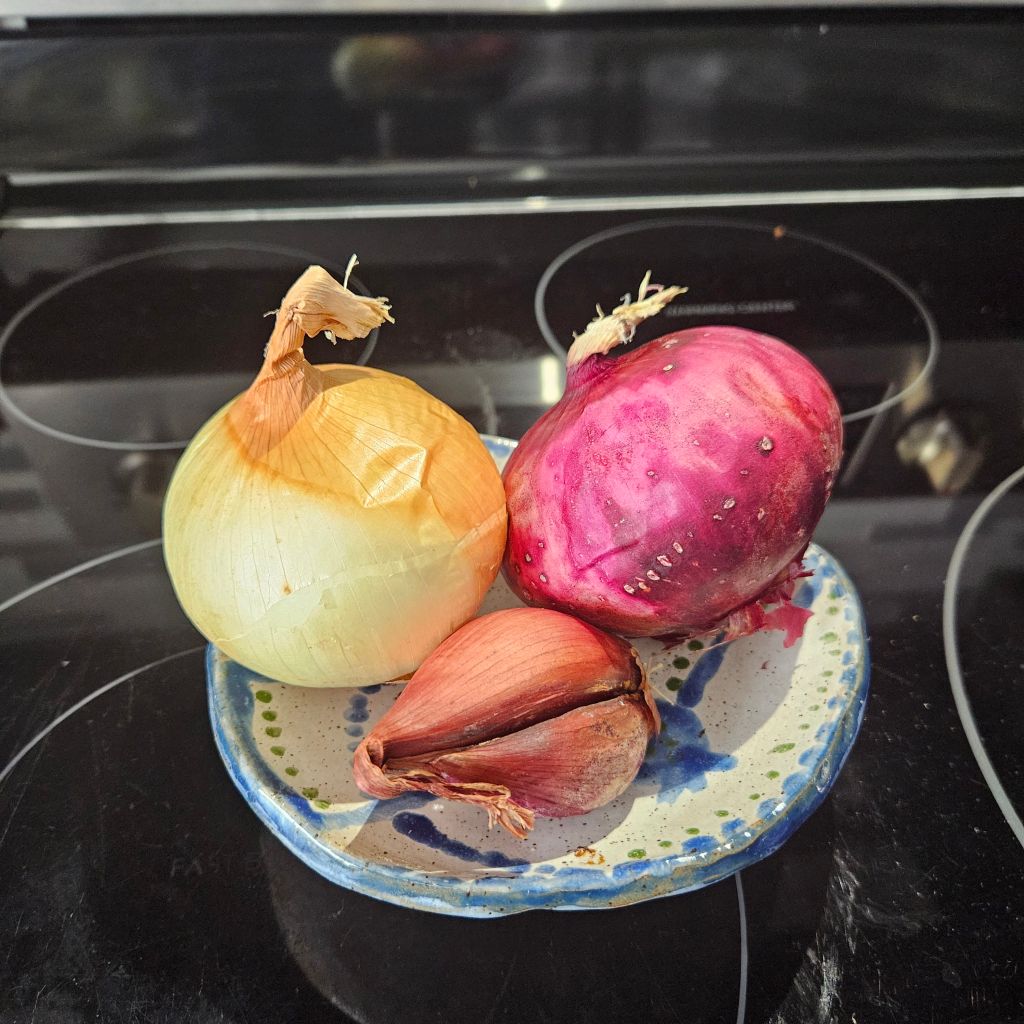
My father likes to “bless” people with a Yiddish phrase that translates to: may you be like an onion—your head in the ground and your legs in the air. It’s especially funny once you picture it.
All these “wishful thoughts” are passive-aggressive at best, but truly hilarious when you think about them. Generations before mine used humor, creativity, and even politeness when they wanted to curse someone.
It was an art form—one I deeply appreciate.
What are the funny phrases your family used?

Introverts, Dogs, and Gardens: Why We’re the Perfect Pair”

They say that dogs and their humans tend to be alike. In our case, it feels like fate.

Our girl is a rescue. We have no clue how old she is. All we know is that she and her seven siblings were taken from a hoarding situation. They were not fed, had no water, received no medical care, and were eventually seized by police and animal control.

Our girl is purebred and expensive, which somehow makes the fact that she was neglected even stranger.

Since we got her fully matured from a rescue, there wasn’t much information about her. All we knew was that she was good with other dogs and very curious.

Next week is our gotcha day, and I’ve realized just how alike we are.

We both hate crowds. We’re both introverts who would rather enjoy our sofa after a hard day of working—or barking.

We both love to garden. I love to plant, and she loves to dig, so we’re a match made in heaven.

We both like to eat—especially good food and bananas, which we often share. We also both love our vegetables; she gets all my cucumbers.

So here’s to another year of digging, gardening, and stealing each other’s snacks. No matter what comes next, we’ll face it as the best duo we know how to be—just a couple of introverts who love their couch.”

Apparently, Even Socks Tell a Story

Over the last almost two years, I lost a quarter of my body weight. Between the GLP-1 injections, the gym, and Pilates reformer classes, I would love to say it was all thanks to healthy eating—but that wasn’t always the case.

After losing all that weight, I expected to need new clothes: underwear, bras, the usual. What surprised me the most, though, was the fact that I needed new socks.

As I lost weight, my feet actually shrank. They became narrower. My socks, which had apparently stretched to accommodate my old weight, were now loose, stretched out, and uncomfortable.

I naturally have small feet, and socks—unless they’re kids’ sizes—never fit perfectly anyway. Still, I was genuinely surprised to discover that new socks were necessary.

The year is ending, and a new one is beginning in just a couple of days. Many of us go through a mental checklist: what we accomplished, what we struggled with, and what falls somewhere in between.

We usually focus on the obvious big things—getting a promotion, starting a new job, hitting a major milestone.

But just like my socks, we often forget to count the smaller, less obvious successes.

One of my goals this year was to become more organized. Unfortunately, my nature isn’t so easy to change. But my pantry is—and, to my great delight, it’s still organized several months later.

My home office still looks like a mess, but my little “sock/pantry” success counts.

We tend to look only for the big, obvious wins right in front of us. Maybe we need to shift our perspective and start noticing the smaller, unexpected victories too.

26 Pairs of Yoga Pants and a Forced Vacation

There is nothing more fun than getting sick on vacation. Unfortunately, this is not the first time—and probably not the last.

When we went to China, pre-COVID, I came back with a nasty respiratory infection that took three months and antibiotics to clear. In Thailand, again pre-COVID, I had a terrible case of vertigo that completely threw me off. In Hawaii, two months before COVID, I came back with severe bronchitis and almost broke a rib from coughing. And this pattern has just continued through the years.

I am now on a forced vacation. Our workplace goes through a shutdown during the December holidays, and once again, my lungs are not happy. Interestingly, all my symptoms started after getting a flu shot. Coincidence? Maybe.

I had many plans for this shutdown: tidying my home office, planning ahead for 2026 for my side hustles, and going through my closet to donate all the clothes I no longer like or haven’t worn in ages.

Instead, I sat with a cup of tea, a tissue in hand, and felt miserable. Today, I felt a little better and managed to go through one shelf. To my great surprise, I discovered I own 26 pairs of yoga pants. When I told my friend, she asked, “Do you wear them all?”

Of course not, I replied. I wear the same four pairs that are always on top. So six pairs went into the donation pile, three pairs with holes went straight into the trash—without a proper Marie Kondo goodbye. It’s not a lot, but I’m celebrating this small win.

Am I upset that I got sick? Yes. But it did force me to rest and to pause. I watched silly TV shows, videos of my favorite—Nate the Hoof Guy—and took naps. In a way, it gave me permission to slow down.

I still have a couple more days off, and who knows what I’ll accomplish—if anything. And that’s absolutely okay.

The Garage Isn’t Done — But I’m Still Proud

In 2025, I started a mission to declutter. It started well, and I did manage to get through quite a lot. My goal was to have a usable two-car garage by the end of the year. But as of today, the 28th, the garage is still a one-car garage and one cluttered space.

The boxes are still there, the chandeliers we took down are still there, and so is the mess. As I’m writing this, I realize that I am my own worst enemy. Instead of being happy with what I achieved, I’m focusing on the glass being half empty.

Yes, my mission wasn’t completed, but we need to celebrate small achievements sometimes. We cleared one big shelf in the garage and donated many unused items. I finally cleared out the bathroom vanities in preparation for the bathroom remodels we’re planning for 2026 — I even chose the backsplash.

I went through all the prescription and over-the-counter medications in the house and tossed the expired ones. I also sent all the GLP injections I had to the proper disposal area.

I looked through my makeup, tossed the old products, bought some new ones (of course), and simplified my already simple routine.

We also made progress in our living room. We got a new sofa, built a cute corner library, and started working on the plants we love in that space. It’s not finished yet, but it’s getting there.

This year included both great events and challenges that affected our progress. Our middle child got married, and shortly after, my husband had a seizure. That put all decluttering on pause as we tried to understand what went wrong and adjust to our new lifestyle.

For 2026, my goal is to continue this mission — to reclaim a quarter of the garage and finish working on the office and all the paperwork stored in boxes. I’m trying to keep my goals manageable by breaking them into one small assignment per week. I’ll plan ahead, write everything down, and track my progress. And if I don’t complete everything, that will be okay too.

Here’s hoping 2026 brings fewer challenges and more balance.

 Choosing Purpose Over Pay

I choose to live my life with purpose and joy—and that choice extends to my work.

I worked eleven days in a row again—not by choice, but by necessity. Part of it was for my division, and part of it was for our parent company.

As my direct boss kept pointing out, “You’re not getting paid extra for this—why are you doing it?”

I’m an exempt employee, so in reality, it doesn’t matter how much I work. I could work two hours or twenty-four in a day, and my salary would stay the same. Maybe my bonus will be bigger, but I don’t have high hopes for that.

Yes, I wasn’t paid extra for this assignment. But I’m at a stage in my life—and my career—where I care deeply about having interest in what I do. I outgrew my current job years ago and chose to stay because it gives me flexibility. That flexibility allows me to take care of my two other loves (besides my husband and kids): my dog and my Pilates class. It also gives me the freedom to manage my side hustles.

When my boss mentioned—again—that I shouldn’t be working for another division because I wasn’t getting paid, I was taken aback. It wasn’t the response I expected, especially from someone in management.

I later told my husband how everything went down, and he pointed out that her reaction reflected her perspective, likely shaped by her own issues with management, and was not a reflection of my actions.

He was right, of course. I might even tell him that one day.

In the meantime, I’ll continue carving my own path at work—choosing projects that bring me joy and fulfillment—until the day I decide to retire and turn my side hustles into my full-time focus.